

Hayagreeva 'Huggy' Rao
Atholl Mcbean Professor of Organizational Behavior and Human Resources, Graduate School of Business, Stanford University
About
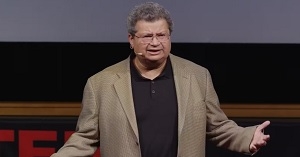
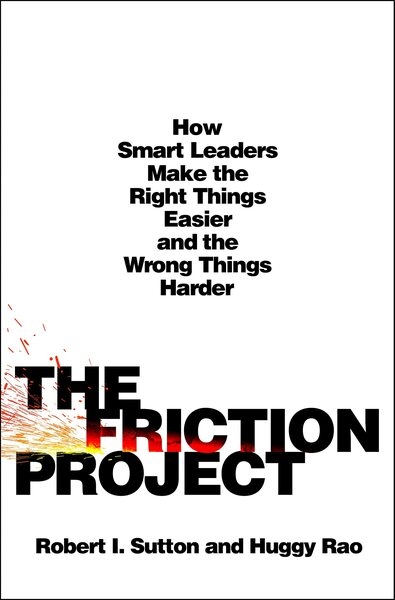
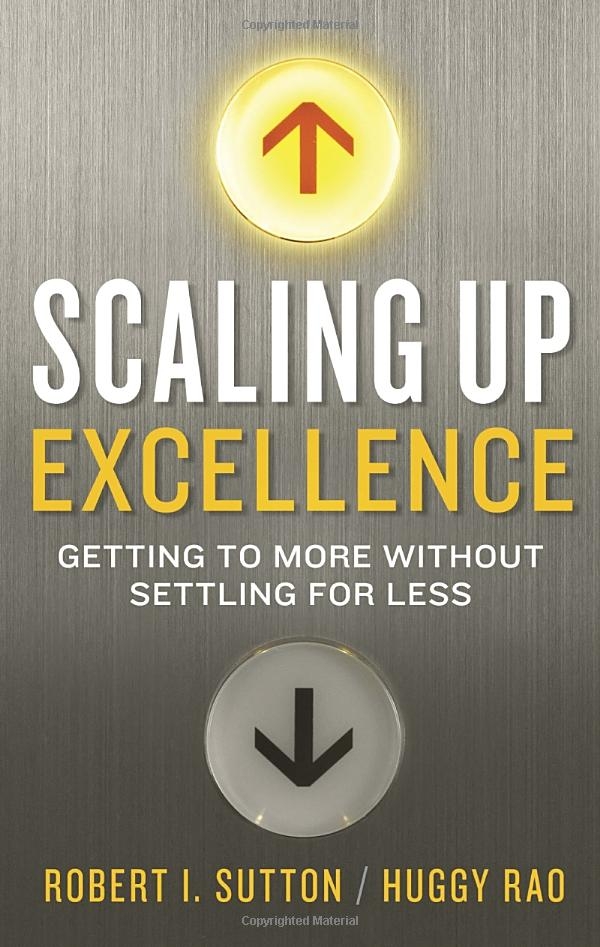
Huggy Rao is the Atholl McBean Professor of Organizational Behavior at the Stanford Graduate School of Business and a fellow of the Center for Advanced Study in Behavioral Science, the Sociological Research Association, and the Academy of Management. He has written for Harvard Business Review, Business Week, and the Wall Street Journal. He is the co-author of the bestselling Scaling Up Excellence and the author of Market Rebels. His latest book, The Friction Project, co-authored with Bob Sutton, is scheduled for release in 2024. Rao and Sutton unpack how skilled friction fixers think and act like trustees of others’ time. They provide friction forensics to help audiences identify where to avert and repair bad organizational friction and where to maintain and inject good friction.
Rao and Sutton are also the Directors of the Stanford Innovation and Entrepreneurship Program. The duo is responsible for several collaborations, including Scaling Up Excellence , a Wall Street Journal Bestseller, and was included in the best business books to read in 2014 by Financial Times, Inc Magazine, Amazon, Forbes, Washington Post, and the Library Journal.
His research has been published in journals such as the Administrative Science Quarterly, American Journal of Sociology, American Sociological Review, Academy of Management Journal, Organization Science, and Strategic Management Journal. He is also the author of Market Rebels: How Activists Make or Break Radical Innovation, Princeton University Press 2009.
He served as the Editor of Administrative Science Quarterly and has been a member of the editorial boards of the American Journal of Sociology and Organization Science and the Academy of Management Review. He has been a Member of the Organizational Innovation and Change Panel of the National Science Foundation.
He is a Fellow of the Center for Advanced Study in Behavioral Science, a Fellow of the Sociological Research Association, and a Fellow of the Academy of Management.
His teaching specialties include leading organizational change, building customer-focused cultures, and organization design. He teaches courses on these topics to MBA and executive audiences. He has consulted with and conducted executive workshops for organizations such as Aon Corporation, British Petroleum, CEMEX, General Electric, Hearst Corporation, IBM, Mass Mutual, James Hardie Company, Seyfarth, and Shaw. He also worked with nonprofit organizations such as the American Cancer Society and governmental organizations such as the FBI, CIA, and the intelligence community.
He has received the Sidney Levy Teaching Award from the Kellogg School of Management and the W. Richard Scott Distinguished Award for Scholarship from the American Sociological Association.
Speech Descriptions
Leaders as Friction Fixers
Friction, much like cholesterol, can have contrasting effects. While bad cholesterol clogs arteries, bad friction hampers initiative and collaboration. Conversely, just as good cholesterol purifies arteries, good friction fosters commitment and acts as a necessary pause for thoughtful decision-making. Leaders should view time as a valuable asset and their organization as a pliable entity. By eliminating detrimental friction and leveraging beneficial friction, tasks align effortlessly, obstacles become challenging, and chaos is averted.
Scaling up Excellence
Scaling-Up Excellence tackles a challenge that confronts every leader and organization – spreading constructive beliefs and behavior from the few to the many, and making sure that people do the right thing even nobody is looking at them or monitoring them. The two challenges of scaling excellence are getting people to do MORE and getting them do it BETTER. Put another way, the essence of leading change is to scale excellence. Scaling is a skill necessary for leaders of small startups, or teams, or departments, and large organizations.
Leading Successful Organizational Change
Leading change does not mean ‘rolling out’ an initiative. Instead, it hinges on creating the conditions under which people can choose a more curious and generous version of themselves, such as executives having a playbook for a 100-day plan.
Connect the Customer Experience to the Talent Experience: Live the mindset
Too often, the customer experience and talent experience are disconnected, so if one promises speed, bureaucratic processes slow you down. Linking the customer experience to the employee experience means living a customer-centric mindset.

MEDIA
BEST KNOWN FOR

Related Speakers

© 2026 United Talent Rights Reserved.
VERSION NEXT-PUBLIC-VERSION-NUMBER